




Alumni Profiles
Alumni Networks
Our alumni network includes Nobel laureates, government leaders, industry pioneers, and renowned academics. We provide ongoing opportunities for engagement, mentorship, and professional development to ensure that Fulbright connections remain strong throughout a scholar’s career.
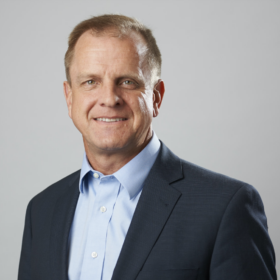
Myles is a Senior Scientist at the U.S. Department of Energy’s National Renewable Energy Laboratory (NREL), in Golden, Colorado. Myles leads research projects on high efficiency III-V solar cells for electricity generation, energy storage and hydrogen production applications. A key focus of his work has been on exploiting radiative processes in solar cells, with the goal of improving efficiencies while lowering barriers to commercialization of photovoltaic technologies.
Myles will spend his time as a Fulbright Scholar in the laboratory of Prof. Nicholas Ekins-Daukes at the University of New South Wales, conducting experiments on two-dimensional quantum nanostructures and understanding how they can be optimally incorporated into solar cells to further increase the power conversion efficiency for a range of terrestrial applications.
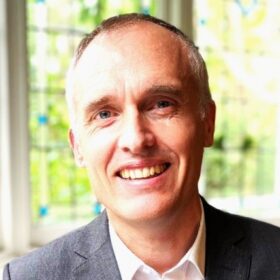
Richard is an experimental physicist who has built and applied novel scientific instruments to particle physics, magnetic disk drives, and lightning research since 1981.
In Australia, Richard intends to combine a new radio imaging technique with high speed video and hopes to capture lightning striking mine shafts or other tall structures. Kalgoorlie, WA is a perfect location for this work because of the excellent visibility, intense summer storms, and proximity of WASM. If Sonnenfeld can capture the final meters of a lightning channel, microseconds before it strikes, the understanding can improve structure protection in the energy industry as well as illuminate the fascinating physics of how nature makes 40-kilometer-long sparks. Working with the Museum of the Goldfields and Curtin University, he is preparing a talk, Lightning like you have never seen it before, to share field results and nurture lay interest and support for atmospheric science.
Hojun is an Associate Professor in the Department of Entomology at Texas A&M University. His research program focuses on understanding the global biodiversity of the insect order Orthoptera (grasshoppers, crickets, and katydids). He is also a leading expert in the study of swarming locusts, and his current research aims to understand the molecular basis of swarming in the Central American locust using various genomic tools. He has published over 50 scientific papers and several book chapters, and he received the prestigious NSF CAREER award in 2013.
As a Fulbright Scholar, Hojun plans to study Australian grasshoppers at the CSIRO Australian National Insect Collection. Australia has a diverse grasshopper fauna, but no one has studied them for more than 20 years. His goal is to develop a long-term research program that will document the biodiversity of Australian grasshoppers and understand the evolutionary processes giving rise to the current diversity.
Ryan is currently as Associate Professor of Range Beef Cattle Nutrition in the Department of Animal and Food Sciences at Oklahoma State University in the U.S. He teaches courses in cattle nutrition and grazing management and has a keen research interest in developing precision management technologies to improve sustainability of grazing systems.
Ryan will use his Fulbright Scholarship to work with colleagues in Australia to develop a new sensor algorithm that he hopes can measure the grazed forage intake of individual cows. Armed with this technology, researchers and grazing managers could make more data-driven decisions to improve productivity and sustainability of their grazing enterprises. This four month effort will build lasting linkages with similarly interested researchers in Australia and the U.S.
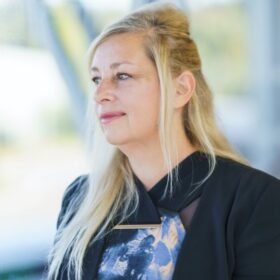
Straddling traditional disciplinary boundaries, Cristin’s investigations of medicine are integral to her artistic process. Her sculptural objects and installations prompt a contemporary cultural critique of societal issues surrounding reproduction and gender identity. Cristin is a Professor of Art in the School of Visual Arts and an Embedded Faculty Researcher in the Arts + Design Research Incubator at Penn State.
As a Fulbright Scholar at the University of Western Australia, Cristin will be an artist–in–residence at SymbioticA, an artistic laboratory dedicated to research and hands-on engagement with the life sciences. At SymbioticA, she will study the science of ectogenesis, the augmentation or replacement of the fecund uterus by a machine. The outcome of her research will be the creation of a sculptural artwork titled Ex-Utero. Ex-Utero will prompt questions and conversations about the socio-cultural impact of ectogenesis, a science with far-reaching implications.
Ateev is a physician and an Associate Professor at Harvard Medical School in the Department of Health Care Policy. His research focuses on the growing use of telemedicine in the United States and its impact on improving the care patients receive and increasing access to rural communities.
During his Fulbright Scholarship he will partner with hosts at the Centre for Online Health to compare how telemedicine is being used in the United States and Australia. In both countries, the use of this promising technology is growing rapidly, but which conditions is telemedicine being used to treat? Is it reaching the most underserved populations? Findings will inform clinical practice, policy discussions, and reimbursement policies in both countries.
John is Associate Professor of Anthropology and Archaeology at Boston University, where he directs the Environmental Archaeology Laboratory. He studies the long-term sustainability of agriculture and land use, with a focus on ancient societies of the Mediterranean and western and central Asia.
As a Fulbright Scholar at the University of Queensland, John will work closely with colleagues at the university on the analysis of plant remains from several archaeological sites in Turkey in order to reconstruct agricultural practices over a period of a thousand years. By investigating how farmers in this semiarid region adapted to simultaneous changes in climate and the rise and fall of empires, they will create a broader understanding of how choices about agriculture have contributed to the persistence and collapse of states, with implications for countries in climatically similar regions in the present day.
Kristine is an emeritus professor of aerospace engineering sciences at the University of Colorado. Her research is centered on using GPS signals to study a variety of Earth processes such as ground deformation during earthquakes, plate tectonic motions, snow accumulation, and ocean tides. She will spend her Fulbright Scholarship at the Department of Geography and Spatial Sciences at the University of Tasmania. She is particularly interested in working with Australian scientists on making new GPS measurements in Antarctica.
Kristine’s goal during this visit to Australia is to help establish a center of excellence for using GPS signals for environmental applications.
Challa is Professor of Chemistry and Biochemistry at the flagship university of the state of Connecticut. He has been teaching and conducting research at the university on Biological Materials and Physical Chemistry for over three decades.
As a Fulbright Scholar, Challa will be working on developing protein hydrogels for the construction of enzyme-based biobatteries. His current work on enzyme stabilization will be combined with the expertise of the host institution to construct and test 4D-printed biobatteries, first of their kind in the world. He will use the jointly developed knowledge for further development and future commercialization.
James has taught classes on various aspects of American government and politics for nearly four decades. Through the Fulbright program he will study the Australian electoral system and consider its applicability to American elections. The basic question is whether the preferential voting or instant-runoff voting system used in South Australia could make American politics more democratic and reduce public discontent with the electoral process. Preferential voting has gained some attention in the United States but has yet to be widely adopted. Gaining a thorough understanding of the Australian system will facilitate an assessment of preferential voting and its potential for improving American elections by encouraging development of a third political party or producing more moderate nominees of the two existing parties.
John specialises in metaphysics and philosophy of mind. His Fulbright project addresses the age-old question: how are appearances related to reality? The everyday world, including the world of scientists working with instruments in their laboratories, seems strikingly different from the world revealed by physics. A tomato is red but is made up of colourless particles. A table is solid, but physics tells us that the table is mostly empty space. Are the tomato, its colour, and the table illusions, in us, not ‘out there’? Or are they ‘emergent’ somethings over and above the particles and fields?
Although versions of both these familiar responses have had legions of adherents, John finds a third, more compelling response implicit in the best Australian metaphysics: physics tells us what the appearances are appearances of. This seems straightforward, even obvious, but the details are surprisingly elusive. John will be articulating these details in consultation with colleagues at Monash and elsewhere in Australia.
Nicholas completed his PhD at the University of Pennsylvania, where he was a Hillman Scholar in Nursing Innovation and NIH-funded Predoctoral Fellow. Nicholas is now a Postdoctoral Fellow at the Defense and Veterans Center for Integrative Pain Management in Rockville, Maryland.
Throughout his Fulbright Postdoctoral Scholarship, he will work with Professor Tracey Bucknall, PhD, RN, FAAN at Deakin University and Alfred Health to examine the integration and utilization of patient-reported outcomes into clinical practice settings. This work aims to guide patients and their providers in making evidenced-based care decisions that optimize pain management and post-surgical recovery.
George, an engineer and mathematician by training, is an innovator in machine and process control, automation, robotics and computational models for increasing safety and health while saving energy and cost in mining operations. He has been working with leading industrial and academic partners in Australia on information technology applications for mining, funded in the U.S. by the Alpha Foundation for Safety and Health.
As a Fulbright Scholar in Future of Mines topics in Australia, he will visit and work with academic and industrial participants for cooperative development and tryouts of new safety enhancement systems for preventive intervention of accidents using big data, modeling, control and robotics.
Andrew is an Associate Professor at Ohio State’s Knowlton School and a registered architect. His Fulbright project, Promoting Indoor Climate Change, looks at how deliberate changes to the interior climate of buildings can reduce carbon emissions, improve occupant comfort, and enrich architectural design. Australian researchers have spearheaded research on innovative thermal comfort models. Through interviews and case studies, Andrew will draw on this work to determine how the spatial intelligence embedded in buildings contributes to improved comfort and energy efficiency in ways that are not currently captured by building performance metrics.
LaShanda is the Associate Dean for Academic Affairs and a Professor of Law at the University of the District of Columbia, David A. Clarke School of Law. She joined the law faculty after ten years working on behalf of children and families at leading child welfare organizations.
As a Fulbright Scholar, she will conduct a comparative study of South Australian and American efforts to reorient child protection systems toward early intervention and family support services. Specifically, LaShanda will assess how the shift will affect children and families with chronic and repeated involvement in the child welfare system as well as Aboriginal children and families. Her research will inform the design of new prevention and early intervention services to these populations in South Australia and to similar populations in the United States.
Jonathan is a professor at Rider University (Lawrenceville, New Jersey) and chair of the International Political Science Association’s Research Council for the study of political finance and political corruption. He had published extensively in the two fields as well as in political theory. His current interest is to examine their interrelationships, with special attention to the contribution of political finance to the decline of trust in government and political polarization in many liberal democracies.
As a Fulbright Scholar, Jonathan seeks to examine these tendencies in Australia, and compare them to those that characterize the vastly different U.S. political system. He hopes to arrive at some theoretical conclusions that would carry policy implications.
Ravi is a Professor at the University of New Mexico, whose formal affiliations span the Departments of Electrical Engineering, Physics, Nanoscience and Microsystems Engineering, and the Center for High Technology Materials. Besides teaching laser physics, fiber optics, optoelectronics, semiconductor and glass physics, he performs research on the development of next generation glass devices for fiber lasers and fiber-optic sensors, with an added emphasis on extending such device capabilities to the mid-infrared portion of the electromagnetic spectrum.
Ravi plans to perform research on embedding custom nanocrystallites in “soft glasses” for new fiber laser and optical sensor applications at the Institute for Photonics and Advanced Sensing. The lasers and optical sensors will be useful for DST with applications ranging from “blinding” incoming missiles to sensing extremely small quantities of undesirable toxic gases. Such nanocrystal-embedded glass lasers and optoelectronic sensors are expected to have significant impact on numerous health monitoring, pollution monitoring, and industrial process monitoring applications.
Steven is the Cyrus F. Tolman Professor in the Department of Earth System Science and Senior Fellow at the Woods Institute for the Environment at Stanford University. At Stanford since 1988, he runs the Hydro Program and directs the Global Freshwater Initiative, which employs an interdisciplinary approach to analyzing water-supply vulnerability. Steven will apply his experience in analysis of freshwater resources in various countries around the world to better understand water security issues and regional coupled human-natural-engineered freshwater systems in Australia.
Steven will use his term as a Fulbright Distinguished Chair in Science, Technology and Innovation at CSIRO to study water security and integrated water resources management in underdeveloped regions of northern Australia.
Pablo is currently Associate Professor at the School of the Art Institute of Chicago, where he teaches art and design in the Department of Contemporary Practices. His research practice produces artworks, designs, and scholarship inspired by technology’s historical connections to creative practice.
In 2013, Pablo launched the NeoLucida, a modern reinterpretation of the camera lucida. Assuming interest in a 19th century obsolete drawing aid would be low; he was caught by surprise when his crowdfunding campaign raised nearly US$500,000 from more than 11,000 worldwide backers. The ensuing lessons in rapidly growing his practice motivated interest in teaching contemporary arts entrepreneurship.
As a Fulbright Distinguished Chair in Entrepreneurship and Innovation, Pablo will explore new strategies and methods for building and sustaining an art practice. Internet tools and global marketplaces are now accessible by artists and designers of all levels; Pablo’s research will encourage artists around the world achieve creative independence.
Lee Ann is currently Head of the Department of Political Science at The Pennsylvania State University, and has written extensively on civic engagement, public opinion, protest, and government policy related to women. She also served on the Pennsylvania Commission for Redistricting Reform and is passionate about voting rights in democratic systems.
During her Fulbright Scholarship at the Australian National University, Lee Ann will compare the adoption and implementation of policies impacting women in the states in Australia and the U.S. and will compare these to other federal countries. Specifically, she will focus on the role that cultural norms and social practices play in shaping policies that vary by women’s race, ethnicity, and social class.
Janet completed a Bachelor of Philosophy (Science) with Physics Honours at the Australian National University in 2019 in the Nonlinear Physics Centre. She is currently interested in quantum topological photonics and atomic arrays, where the overarching goal of these fields is quantum computing applications. She previously completed an internship at Nanyang Technological University in topological photonics. Janet has tutored at science camps such as the Curious Minds and Physics Olympiad program run by Australian Science Innovations.
As a Fulbright scholar, Janet will begin a PhD in the United States on topological photonics.
Grace was the first medical student in Australia to be awarded a New Colombo Scholarship by the Department of Foreign Affairs and Trade in 2015 for her project in post-war health policy. Since then, she has also served as the executive director of the renowned Australian Medical Student Journal and contributed to numerous research projects including the characterisation of a novel fusion protein designed to prevent pancreatic cell death, which was awarded the 2017 Mater Honours Scholarship and the 3MT People’s Choice Award.
Grace will use her Fulbright Scholarship to pursue her research interests in philosophy, focussing on fields including epistemology, metaphysics, ontology and religious philosophy. It is her aim to merge knowledge of these fields with neurobiological research to effectively alleviate symptoms of psychiatric illness. She aspires to become an author, academic and itinerant speaker, with a focus on the crossover between philosophy, theology and human behaviour.
Ben is a lawyer with a strong interest in public and constitutional law. As they regulate and constraint the exercise of public powers, they are capable of affecting the life of every Australian. After graduating from the Australian National University with a University Medal, Ben has worked with public law in various roles. He was an Associate to the Honourable Chief Justice Helen Murrell of the ACT Supreme Court, a volunteer at Legal Aid ACT and Canberra Community Law and has participated in public interest litigations before the High Court. He has also published articles and commentaries on constitutional doctrines as applicable to an evolving Australian society.
Ben will use his Fulbright Scholarship to pursue a Master of Law at a leading U.S. institution. He hopes that through a comparative study of public and constitutional law, he can better contribute to legal and constitutional reform initiatives in Australia for the future.
Chloe is a MD/PhD student at the University of Queensland, supervised by Dr Jacob Gratten and Professor Naomi Wray. Her research integrates large genomic and clinical datasets to understand how the entire body – and not just the mind – is affected by autism spectrum disorder. Chloe is fundamentally motivated to understand the interplay between brain and body – an area of medicine that is poorly understood yet contributes to both physical and mental health.
As a Fulbright Future Scholar, Chloe will work with Dr Michael Gandal at the University of California, Los Angeles. She will analyse novel brain genomic datasets to better understand autism genetics and hopes to contribute to a clinical trial investigating a drug that may ameliorate disabling aspects of autism. Ultimately, Chloe plans to leverage precision medicine approaches and systems-level perspectives to progress towards new diagnostics and treatments in psychiatry, where few options currently exist.
Alice has significant expertise in environmental law, having worked across the world, including in Japan, Germany and the U.K. She is a dual-qualified lawyer, in Australia and England & Wales. For the past few years, Alice has served in senior legal positions in Australian government. Recently at the NSW Environment Protection Authority, Alice acted as the lead counsel for the state’s largest litter reduction initiative. Alice was appointed a member of the Australian delegation to the World Social Forum in Tunisia.
As a Fulbright Scholar, Alice will explore the world-leading and often audacious environmental policies pioneered in the U.S. Over two years, she will specialise in the ground-breaking science that has driven these policies. Alice hopes to apply this learning to help shape the future of Australian environmental policy.