
Plant diseases do not stop at national borders. Fungal spores and other biological threats can travel through the atmosphere over long distances, reaching crops far from their source. Detecting these threats before they take hold is a challenge for agricultural biosecurity, one that researchers in Australia and the United States are working together to address.
Professor David Schmale, the J.B. Stroobants Professor of Biotechnology at Virginia Tech and a 2026 Fulbright AUKUS Scholar, is collaborating with Australian researchers on a project titled Securing Food Futures: AUKUS Collaboration on Atmospheric Incursions of Invasive Pathogens. The project brings together expertise in atmospheric science, plant pathology, drone technology and biosecurity to improve the prediction, detection and response to airborne threats to crops and agricultural systems.
The work has practical implications for both countries. Invasive crop pathogens can damage harvests, disrupt agricultural supply chains and threaten export markets. Better ways to monitor their movement through the atmosphere could help researchers and biosecurity agencies identify emerging risks and strengthen preparedness.
Combining complementary technologies
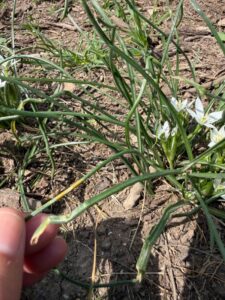
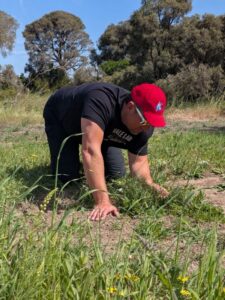
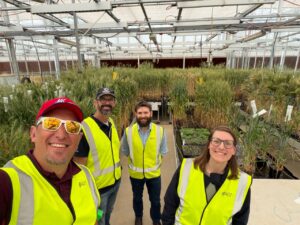
In South Australia, Professor Schmale is working with Dr Rohan Kimber and colleagues at the South Australian Research and Development Institute (SARDI), whose research includes monitoring airborne fungal pathogens across agricultural landscapes.
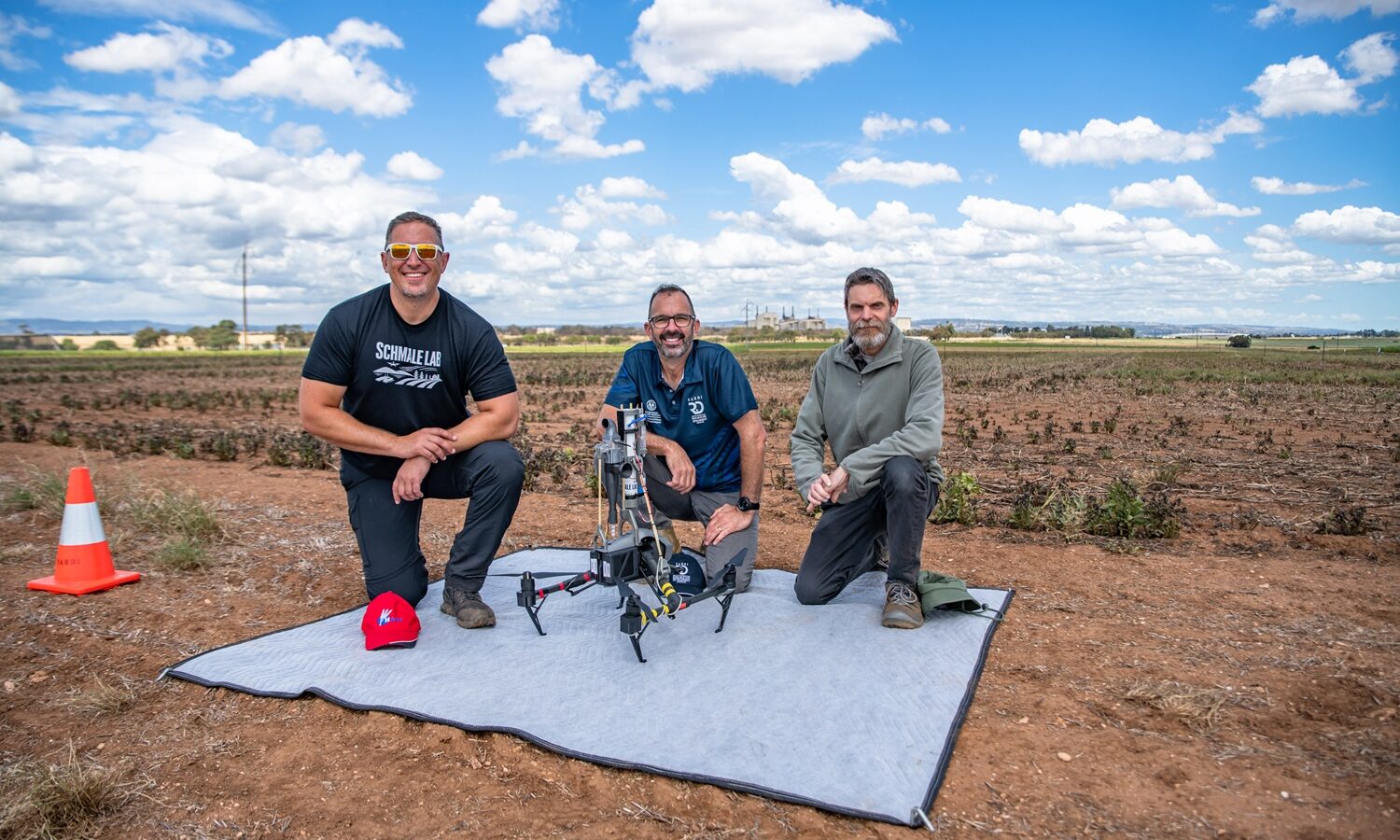
The collaboration is combining SARDI’s air-sampling technology applied to area-wide landscapes with Professor Schmale’s drone-based atmospheric sampling system. By bringing the two approaches together, the researchers aim to expand their ability to collect samples and investigate how pathogens move through the air.
In October 2026, the team successfully undertook test flights in Adelaide using the integrated sampling system, an important practical step in evaluating how their complementary technologies can work together.
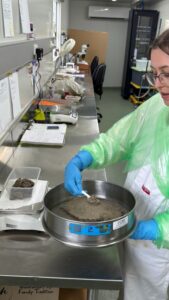
The researchers are also examining threats to Australian grain production, including cereal rusts and Fusarium fungi, which can affect crops and food safety. Discussions with Australian Grain Technologies have helped connect the research with the challenges facing the grain industry and the importance of maintaining reliable export markets.
From crop protection to wider biosecurity
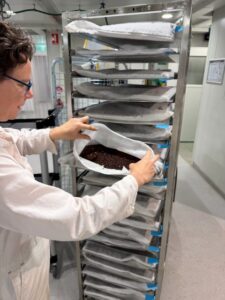
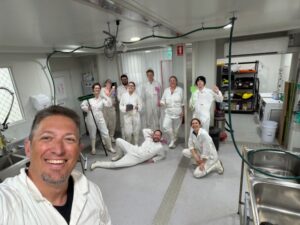
The project also draws on Australian expertise beyond plant disease. During his time in South Australia, Professor Schmale visited a sterile blowfly production facility on Kangaroo Island to learn about insect production, quality control and biosecure operations.
This work offers another perspective on how specialised biological research can contribute to biosecurity. Techniques used to manage insect pests in Australia may also inform preparedness for livestock threats in the United States, including the New World screwworm.
Professor Schmale is also collaborating with Professor Arko Lucieer and colleagues at the University of Tasmania on remote sensing, drones and geospatial technologies. This work will explore how these tools can support the monitoring of invasive pathogens such as myrtle rust and contribute to an increased understanding of ecosystem health and biodiversity.
Together, these activities demonstrate the breadth of the project: connecting different forms of technical expertise to address biological threats that affect agriculture and the environment.
A partnership with strategic value
The Fulbright AUKUS Scholar Award supports collaboration between Australia, the United Kingdom and the United States on shared challenges relevant to the security and stability of the Indo-Pacific. It enables researchers to work across institutions and national borders, building professional relationships alongside the exchange of specialist knowledge.
“Science advances through relationships, shared curiosity, and a willingness to learn from one another. My Fulbright AUKUS experience has reinforced just how much we can accomplish when we bring people with different expertise together around a common purpose. The collaborations we are building in Australia have the potential to extend well beyond my time here, creating new opportunities to protect agriculture and strengthen food security across our nations,” Schmale said.
For Professor Schmale, the Australian collaborations provide opportunities to test complementary approaches, learn from established biosecurity capabilities and explore how advances in atmospheric surveillance could be applied in different settings.
The longer-term potential is significant. More effective atmospheric monitoring could help researchers better understand where crop pathogens originate, how they spread and where surveillance may be most useful. Further research will be needed to establish how these approaches can support operational detection and response.
By connecting Australian expertise with U.S. research capabilities, the project is laying practical groundwork for stronger agricultural biosecurity and more informed responses to airborne biological threats, with benefits that could extend across both countries


