
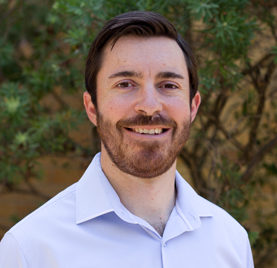
David obtained his bachelor degree in Applied Chemistry with Honours from the University of Technology Sydney. He continued his studies at UTS, obtaining his PhD in Analytical Chemistry in 2012. David was a founding member of the Elemental Bio-imaging Facility at UTS, which contains one of the finest collections of high-tech analytical equipment in Australia. He was employed from 2010-2014 as its Laboratory Manager during which time he developed his skills in novel applications of advanced analytical instruments and management. This experience also provided him with insights into diverse fields of research, ranging from biochemistry to nanomaterials, providing him with excellent cross-disciplinary understanding.
During his PhD and in the ensuing years, he became involved in projects which looked at the effects of metals in human health and in particular degenerative diseases such as Parkinson’s and Alzheimer’s diseases and more recently muscular dystrophy. David commenced a post-doctoral fellowship in 2015 with the aims of using his knowledge of instrumentation to develop novel analytical techniques to further investigate the roles of bio-metals in physiology and to use metal tags to quantify biomolecules that may be indicative of disease.
The Fulbright Postdoctoral Scholarship will allow David to develop a novel approach to quantitatively determine dystrophin levels in mouse models of Duchenne muscular dystrophy, a debilitating disease that primarily affects young people. This research will take place in the laboratory of Dr Wanagat in the Division of Geriatrics at the University of California Los Angeles. This research will enable measurement of small changes in dystrophin levels, which may be indicative of an effective treatment. Changes as small as 10-15% may provide extended and/or improved quality of life, but cannot currently be well quantified. The strategies developed during this project will be applicable to numerous disease states which currently rely on qualitative histological assessments.