



Alumni Profiles
Alumni Networks
Our alumni network includes Nobel laureates, government leaders, industry pioneers, and renowned academics. We provide ongoing opportunities for engagement, mentorship, and professional development to ensure that Fulbright connections remain strong throughout a scholar’s career.
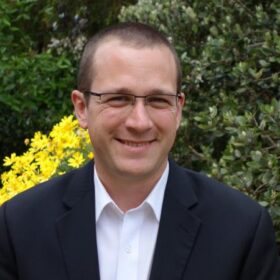
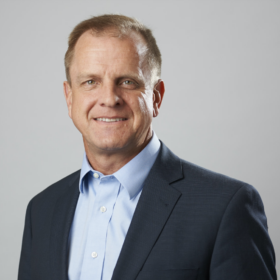
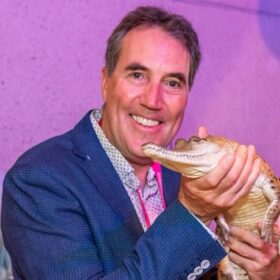
Paul hears cases in Australia’s busiest federal trial court, the Federal Circuit Court of Australia.
The aim of Paul’s research as a Fulbright Scholar is to improve access to justice in Australia by reducing court delays. Properly directed federal funding for the Australian federal trial courts is the key. The judiciary in the United States is integrally involved with the legislature in the setting of federal court budgets each year. Paul will use his Fulbright Scholarship to examine the process of federal court funding in the United States and in particular, the interaction between the federal judiciary and the U.S. Congress in this process with a view to formulating a similar proposal suitable to the Australian federal landscape. In order to conduct this research Paul will be based at the Federal Judicial Center in Washington, D.C. and also at Harvard University.
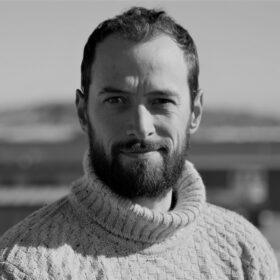
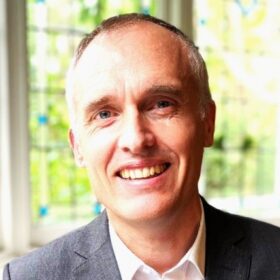
Stephan is an Associate Professor in the Strategic and Defence Studies Centre at the Australian National University.
As the Fulbright Professional Scholar in Australia-U.S. Alliance Studies, based at Georgetown University’s School of Foreign Service, Stephan will examine why both countries have created fewer permanent arrangements to implement their treaty commitments than is the case in other U.S. alliances. He will examine, through interviews in Canberra and Washington, whether this will remain sustainable as strategic pressures in the Asia-Pacific increase, and make recommendations on how Australia and the United States could improve the political-military management of closer alliance cooperation through an alliance strategic concept, integrated staff or new command arrangements.
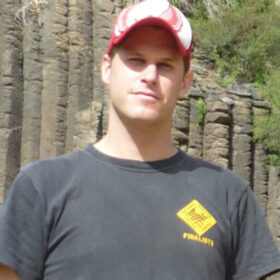
Matthew is currently Head of the School of Humanities and Social Sciences at Deakin University and an executive member of the Centre for Humanitarian Leadership (CHL).
Matthew will use his Fulbright Scholarship in Non-Profit Leadership to spend three months at Save the Children USA, Harvard University and Tufts University to develop formal relationships between these institutions and the CHL. These partnerships will enhance the professional development of humanitarian workers in responding to complex humanitarian emergencies. Working with Save the Children USA, Matthew will increase connections between aid agencies in the U.S. and the CHL in Australia and create new professional development initiatives that respond specifically to the needs of humanitarian workers responding to disasters in North and South America.
Todd is an Associate Professor in the School of Mathematical Sciences at Monash University.
The main aim of Todd’s Fulbright project, Gravitating relativistic fluid bodies: a mathematical analysis, is to develop a rigorous mathematical foundation for gravitating relativistic material bodies that is applicable to astrophysical systems. This project will significantly improve current understanding of how matter and gravitational fields behave near the matter-vacuum boundary of physical bodies and provide important guidance for constructing stable numerical schemes to numerically model systems of gravitating relativistic fluid bodies. During his time at Princeton University, Todd will work with leading researchers in the field of Mathematical Relativity and will participate in the activities of the Focussed Research Group in Mathematical General Relativity hosted by the Mathematics Department. He will also visit the University of Michigan and Johns Hopkins University to collaborate with researchers on aspects of his project.
Tim is a Professor of German and the Deputy Director of the Institute for Advanced Studies in the Humanities (IASH) at the University of Queensland.
Tim will use his Fulbright Senior Scholarship to spend time at both the University of Chicago and the University of Texas at Austin’s Harry Ransom Center. In Chicago he will investigate the writer J.M. Coetzee’s links to The Committee of Social Thought, which Coetzee regularly visited from 1996 to 2003. In Austin he will do follow-up research at the Coetzee archive. His aim will be to advance a major project focusing on Coetzee, one of the most important writers in the world today. Beyond this, his visit will consolidate ties between IASH at UQ and the Committee on Social Thought at Chicago, two prominent centres of world-leading research in the Humanities.
Patrick is the Coordinator of the Masters in Applied Anthropology and Participatory Development Program at the Australian National University, and carries out research in gender and development, foreign aid policy, and NGOs.
Patrick’s Fulbright project will see him working with Feed the Future Innovation Labs at Kansas State University to analyse their agricultural research in aid and development programs, and in particular how local communities (particularly women) can adapt this research to their local needs. From this research Patrick will gain an insight into the future directions foreign aid-supported agricultural research may take. The focus will be on the implications for U.S. and Australia’s agricultural development assistance in a rapidly changing world, and most importantly, how this research can have the greatest impact on local communities.
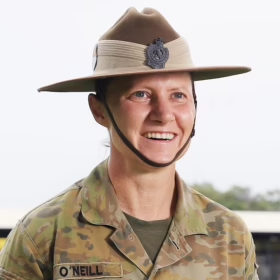
Menna is an ecologist specialising in wildlife conservation and ecosystem restoration in the School of Biological Sciences at the University of Tasmania. She leads research on native marsupial carnivores, Tasmanian devils and quolls, how their ecological interactions might protect wildlife from feral cats, and how the Tasmanian devil is evolving to save itself from a devastating novel transmissible cancer.
Menna’s Fulbright project, Harnessing Native Predators to Conserve Wildlife at Landscape-Scale, is a major opportunity to expand the scope of ecological science for tackling Australia’s biodiversity crisis. She will work with Professor Bill Ripple at Oregon State University to understand how ecological history influences the impacts on biodiversity of invasive predators, and to test the efficacy of native predators for invasive predator control. The project will contribute to understanding the natural ecological processes that can be harnessed to restore native species and functional ecosystems on large scales in unconfined landscapes.
Tim is Director of the Centre for Remote Health in Alice Springs. He is a clinical psychologist researcher and clinician and is particularly interested in improving patients’ control in health care settings in terms of the way in which services are designed and delivered, as well as how patients are able to access these services. Patient control is especially important in remote settings where access to services is compromised and health outcomes lag unacceptably behind the health enjoyed by urban citizens.
Tim will use his time on the Fulbright Scholarship to develop research training for practicing health professionals in conjunction with colleagues at the Center for Behavioral Health Innovation at Antioch University so that health professionals in remote and other underserved communities can evaluate and improve the programs and services they offer for the benefit of the patients they serve.
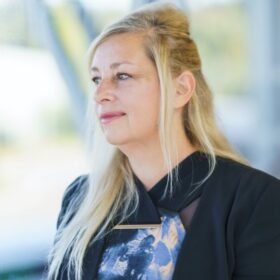
Margaret is Head of the School of Music at the University of Queensland. She has held senior roles in music education leadership including President of the International Society for Music Education. Her Fulbright Senior Fellowship, The rhythms and modes of musical childhoods: an international investigation of young children’s creative music practices, builds on her longitudinal studies of Australian children’s singing and song-making and the role these play in young children’s learning and development.
Margaret will work with colleague Professor Patricia Campbell from the University of Washington to access the archives of the Smithsonian Institute and the Library of Congress in Washington, D.C. and analyse their collections of children’s song and song-making. The project will contribute to understandings of the nature of children’s song-making across diverse cultures and epochs, the social and cultural settings that support this work, and the meaning and value for children of singing and song-making.
Brett is the Director of Science and Conservation at the Royal Botanic Gardens and Domain Trust in Sydney where he has worked for the past 28 years. He has research interests in plant pathology and mycology and is a world authority on the fungal genus Fusarium which causes some of the most important plant diseases globally, produces toxins in food and is a pathogen of humans.
For his Fulbright project, Brett will spend time in the Department of Plant Pathology at Kansas State University expanding his research on Fusarium species in natural ecosystems to the U.S. allowing a comparison of these fungal plant pathogens in Australian and U.S. ecosystems. He will also complete a second edition of the widely-used diagnostic manual, the Fusarium Laboratory Manual, on these important fungi.
Jessa will study the use of the Anastatus wasp as a biological control agent for pests in Macadamia farms near Brisbane, Australia. This research project will include a new species description of the wasp and a study of the ecology of both the raised and wild varieties of this wasp. Insights from this project will extend into her research on the use of parasitoid wasps and hopefully guide the development of new biological control agents. Jessa aspires to improve our usage of biological control agents to regulate pest populations in crops by understanding how these insects and other arthropods interact with pests and the environment. These studies may also be based on insights from land managers. This combination of research interests should improve overall execution of biological control on farms globally. These interests will be pursued throughout the completion of her PhD in Entomology and possibly furthered as a professor.
Michael completed his B.S. in Biomechanical Engineering at Stanford University in June of 2017. His undergraduate research in the CHARM Lab focused on haptic feedback for medical devices. Michael will use his Fulbright Postgraduate Scholarship to spend 10 months at the University of New South Wales (UNSW) working with Professor Nigel Lovell. At UNSW, Michael will develop a wearable system to monitor gait and falls in patients during their daily lives. This system will be used to answer fundamental biomechanical questions such as how gait changes with age and how falls naturally occur. Additionally, this system will be used for long-term monitoring to warn patients when they are at an increased risk of falling so that a medical intervention, such as balance training, can be given.
Michael will use the time in Australia to create new professional networks in the fields of biomechanics and medical devices, and begin a collaborative research project between Stanford University and UNSW focused on preventing fall-related injuries.
A native of Whippany, New Jersey, Caroline received her undergraduate education at Harvard University in Human Developmental and Regenerative Biology, with a secondary field in Economics. During her undergraduate years, Caroline studied metabolic syndrome at the Cowan Laboratory of the Harvard Stem Cell Institute. As a Herchel Smith Fellow in 2016, she researched the effects of maternal malnutrition on fetal development. An avid traveler, Caroline has also worked on various humanitarian projects throughout Southeast Asia and southern Africa.
For her Fulbright Anne Wexler Scholarship, Caroline will pursue a Master of Philosophy in Medicine at the University of Melbourne. She will conduct research at the intersection of climate change and public health, specifically focusing on how vulnerable populations respond to climate-influenced food insecurity.
Victor Lopez-Carmen earned a B.S. degree (Health Sciences and Chemistry) with honors from Ithaca College in May, 2017. As an enrolled member of the Crow Creek Sioux tribe with Yaqui heritage, he has a strong will to utilize his background in health, science, and advocacy to serve Indigenous Peoples globally.
Through his Fulbright award, Victor will attain a Master of Public Health at Western Sydney University while conducting a project with urban Aboriginal families who have sent their children to boarding schools. Using Indigenous methodology, in-depth conversational interviews, and group yarning circles, he will articulate the reasons, needs, feelings, expectations and experiences of Aboriginal parents & carers who have sent or are sending their Aboriginal children to urban boarding schools. The project will fill a void in the research that will allow better understanding of how boarding is experienced by Aboriginal families in urban contexts. The implications of this research can be used to provide concrete recommendations and info to assist boarding schools when engaging with Aboriginal families of Aboriginal boarding school students, thus creating educational environments that better promote sociocultural health and resilience
Maureen is pursuing a PhD in Ecology and Environmental Sciences at Montana State University. As a Fulbright Postgraduate Scholar, she will use modelling and field-based methods to study the disease ecology of Hendra virus. The virus circulates in Australian flying foxes, but cross-species transmission results in sporadic fatal disease in horses and humans. Recently, risk has increased following widespread urbanization of the inherently migratory bats, likely in response to habitat loss. These trends raise a number of conservation concerns for flying foxes, which are critically important pollinators and seed dispersers. In collaboration with Dr. Hamish McCallum at Griffith University, Maureen will work with Dr. Justin Welbergen at Western Sydney University to understand how changes in food availability and nutrition alter the foraging behavior of flying foxes, driving urban habituation and Hendra virus spillover. Understanding the ecological drivers of urban habituation will inform effective management strategies designed to simultaneously protect flying foxes and mitigate disease risk.
Noah recently earned his BS in physics and mathematics at the University of Wisconsin at Madison. While there he conducted computational research on spin-based silicon quantum computing architectures under Dr. Mark Eriksson. In addition, he was invited to attend an undergraduate school on quantum information processing at the Institute for Quantum Computing at the University of Waterloo.
For his Fulbright Postgraduate Scholarship, Noah will work on a silicon-based quantum computing research project at the University of New South Wales (Sydney) in the laboratory of Professor Andrea Morello, the manager of the Quantum Spin Control program in the Centre of Excellence for Quantum Computation and Communication Technology (CQC2T). Quantum Computation is a newly theorized computation scheme that utilizes the laws of quantum physics to store and manipulate information in a different way than classical computers. Noah’s research will focus on developing and testing a novel architecture for electrically tuneable readout of quantum information from silicon-based spin quantum bits, a specific hardware implementation of a quantum bit, which is the basic building block of a quantum computer. This research will give Noah the opportunity to contribute vitally to the scaling up of a silicon-based quantum computer and the unique chance to act as ambassador between the silicon quantum computing communities in the U.S. and Australia.
Rachel earned her BA from Rice University in 2017 in Environmental Science and Theatre. While the two fields seem unrelated, they intersect in her passion for public speaking, exchanging perspectives, and preserving a seemingly extinct culture: storytelling. During her time in Australia, Buissereth will conduct a transdisciplinary research project exploring different ways to break boundaries between environmental, technological, and social factors affecting indigenous peoples in the Fitzroy River Catchment.
She will use various participatory methods, such as in-depth interviews, participatory 3-D mapping workshops, and participatory GIS mapping workshops, to create avenues of understanding between indigenous and scientific knowledge and to encourage informed decision making on future agricultural projects in the Fitzroy River Catchment. Through storytelling, Buissereth aims to facilitate conversation, collaboration, and the equitable sharing of knowledge between indigenous and non-indigenous peoples in Australia and in similar communities world-wide.
Turner earned her BS in psychology at Fordham University located in Bronx, New York in 2017. She spent her four years at Fordham as a member of the women’s soccer team and was named Captain for her senior season. Off the field, she was a research assistant on numerous studies for the Department of Psychology. Additionally, she completed her Honors Thesis on athlete pre-screening mental health measures and their perceptions of the mental health services offered.
Turner will continue her research while at the School of Human Movement Studies at the University of Queensland in Brisbane, Australia. Her specific focus will be the athletic identity formation of Paralympic swimmers with cerebral palsy as they complete a performance-focused training program. She looks forward to learning more about how this information may be beneficial to an athlete’s performance, and plans to bring these insights back to the U.S.
Sylvia recently graduated from the Pennsylvania State University with degrees in Physics and Spanish and honors in astrophysics. During her undergraduate career, she conducted research on ultra high energy cosmic rays using data from the Pierre Auger Observatory and on gravitational waves using data from the Laser Interferometer Gravitational Wave Observatory (LIGO), presenting her research at conferences in Spain, Argentina, Australia, and the United States. She will continue her study of gravitational waves through her Fulbright Postgraduate Scholarship at Monash University, using advanced data analysis techniques to improve and expand current gravitational wave search pipelines, uncovering new information about astrophysical gravitational wave sources and testing our understanding of the fundamental theory of gravity.
Following her time at Monash, Sylvia will continue her research with LIGO while pursuing a PhD in Physics at the Massachusetts Institute of Technology.
Marcia is Professor of Law at the University of South Carolina. She teaches Family Law, Immigration Law, and American Indian law. Her work focuses on the treatment of Native American families and the removal of Indian children. In the United States, she has worked with national organizations, such as the National Indian Child Welfare Association and The Center for Missing and Exploited Children, and individual Indian tribes.
Her Fulbright scholarship will be a comparative project examining the different ways the United States and Australia have responded to the removal of indigenous children. Despite a very similar history, the two countries have a fairly different approach to addressing the break up of native families. Marcia hopes her research will help identify the most effective aspects of these different methods and suggest new ways of reducing indigenous child removals. She looks forward to working with her Australian colleagues on these important issues.
Deborah is a Professor of Law and Ira C. Batman Faculty Fellow at the Indiana University Maurer School of Law. Her recent research has focused on pregnancy discrimination, same-sex marriage, and the intersection between domestic violence and employment. Her work has appeared in leading law reviews, and she has received several awards for her scholarship. She has also been consulted as an expert on these subjects by numerous media outlets, including the New York Times and the Washington Post. More information on her professional background and links to her publications are available here.
As a Fulbright scholar, Deborah will be studying Australia’s support for workers who are also juggling family responsibilities. Her research will focus on Australia’s recently-enacted paid parental leave scheme and other legal supports, such as paid time off to care for family members and a right to request a flexible working schedule, that are unavailable in the United States. Deborah plans to use semi-structured interviews with stakeholders to learn about Australia’s legal reforms in this area and consider the lessons they may hold for policy makers and researchers in the United States.
Deborah will be traveling to Australia with her husband and two children. They are all really looking forward to the adventure.
Amal Trivedi, M.D., M.P.H., is Associate Professor of Health Services, Policy and Practice at Brown University and a Research Investigator at the Providence VA Medical Center. He is a general internist and health services researcher whose work focuses on measurement of quality in health care, racial and socioeconomic disparities in health care, and the effects of federal and state health policies on vulnerable populations. Dr. Trivedi’s research has been published in Health Affairs, JAMA, Annals of Internal Medicine, and the New England Journal of Medicine. He directs Brown University’s doctoral program in health services research and a VA post-doctoral fellowship; and teaches courses on quality measurement and health services research methods for graduate students.
During his Fulbright Fellowship, Dr. Trivedi will collaborate with colleagues at the University of Melbourne to evaluate the impact of the Australian government’s efforts to close Indigenous health disparities.
Jaime earned a BA in English and Spanish from Luther College (Decorah, Iowa), and a PhD in Cultural Studies from the University of Iowa. She is an associate professor of Kinesiology and Women’s, Gender, and Sexuality Studies at Penn State. Jaime specializes in sport history, with a particular focus on gender, sexuality, and racial politics. She will use her time at the University of Technology, Sydney to pursue research that considers the interactions between culture and sporting bodies.
Seth received a B.S. in chemistry from Washington State University in 1990 and a Ph.D. in inorganic chemistry from Clemson University in 1994. He then studied conjugated organic polymers as a postdoctoral associate at the University of Oregon in 1995. He accepted a teaching position at Oregon in 1997, before moving to North Dakota State University in 1999. Active in both materials chemistry and the history of chemistry, his research includes the design and synthesis of organic semiconducting materials, solar cells, organic light emitting diodes, the history of materials, and chemical technology in antiquity. He has contributed to books in both materials and history, and has published more than 95 research papers and book chapters.
At Newcastle’s Centre for Organic Electronics, Seth will study the application of new semiconducting polymers (plastics) to organic solar cells and near-infrared photodetectors in order to develop new beneficial technologies for society.
Stefan is an Associate Professor of Practice in the Department of Chemistry at Purdue University. He is a biochemist who works in the area of computer-assisted drug discovery. As a Fulbright Senior Scholar, he will conduct research on a joint project with Adam McCluskey’s group at the University of Newcastle on the development of new drugs to combat breast cancer. Stefan will develop computational models that predict the behavior of drug-like molecules inside cancer cells. Promising candidates will then be synthesized and tested in bioassays by the McCluskey group. Stefan is eager to learn more about modern synthetic aspects of drug design and establish new professional connections with Australian researchers. His stay in Newcastle will be the start of a new, long-term collaboration between his and Adam McCluskey’s research teams.